Today is a day of prayer for Exploration 2011. Exploration is a gathering of people ages 18-26 who are discerning, wrestling, or just trying to figure out their call into ministry. It is a weekend of people gathering from all over the church to pray, worship, teach, learn, listen, and hang out with other people who are asking some of the same questions about ordained ministry in the United Methodist Church. Exploration 2011 will be held in St. Louis, MO at the Millenium Hotel November 11-13. Registration is online and TODAY is the last day of earlybird registration!
And now, a prayer for exploration 2011:
God,
you know all people and you have made all people in your image, you love us and know us and we thank you for your love and call upon all of our lives:
for all of us: a call to work, live, and love people.
And today we especially pray for those who are discerning your call on their lives
to Ordained Ministry as Elders and Deacons in the United Methodist Church.
We pray that you would guide, equip, lead, and develop them into servants of the whole church and the whole world.
We pray for exploration 2011–that your Spirit will be obvious and apparent to all who gather.
I have always loved taking pictures–since being a kid and capturing images using one-time-use cameras to “borrowing” my mom’s film camera…
I have always loved taking pictures–since being a kid and capturing images using one-time-use cameras to “borrowing” my mom’s film camera (a Canon EOS Rebel…which I STILL have in my possession…oops). Recently I’ve really enjoyed shooting video on my Digital SLR camera–formerly a Canon T1i and I have recently upgraded to a Canon 60D! (Christmas & Birthday until I’m 35 or so…). The video quality and the shallow depth of focus on these kinds of cameras is changing the way films are being made. Last year an entire episode of the TV show House was filmed on a Canon DLSR camera! They are also the tools of choice for amateur and aspiring film makers–both in the commercial and non-profit film world.
This spring and this summer I have had the privilege of working with a Design Team for Prepare 2011, which is a new collegiate minister training event (both meanings in there–it is both a NEW event and for those NEW to the field). The design team is made up of campus ministers and chaplains who are experienced veterans of ministry with college students. Prepare 2011, a mentor-based training event for those new to ministry with college students, will be held July 17-19th in Nashville, TN (a few days before the United Methodist Campus Minister Association gathering July 20-23 in Nashville, TN).
At a planning session back in April a few members of the design team allowed me to film a couple of quick takes about what to expect at Prepare 2011 and why new campus ministers and chaplains should come to Prepare. Using my Canon T1i and a 50mm 1.8 II lens I quickly captured a few minutes of video (literally we filmed the whole thing in 5 mins) and then created the following promo video. Enjoy.
This is not a hymn that provides answers about how Christ is present and God’s grace is conveyed, but simply marvels that grace is indeed given…
“O the Depth of Love Divine” was written in 1745 by Charles Wesley as a poem/hymn describing how God’s grace is available and given to all people through Holy Communion in the Christian Tradition. This is not a hymn that provides answers about how Christ is present and God’s grace is conveyed, but simply marvels that grace is indeed given. In the United Methodist tradition we practice “open communion”–meaning ALL people are welcome at God’s table and that God’s grace is made available and tangible to all.
Charles and his brother John Wesley were the founders of the renewal movement in the Anglican Church that eventually became the Methodist Church. This is my own setting of the hymn, but you can find Carlton Young‘s (famous arranger of hymns & the hymnal) setting of “O the Depth of Love Divine” in the United Methodist Hymnal #627.
Lent is one of those seasons where the phrase “Lord Have Mercy” may get a good bit of usage in worship…
As we move into the season of Lent in the Christian liturgical calendar (a season of preparation, reflection, and spiritual growth) it is good for us to look to Jesus’ time spent in the wilderness being tempted (Matthew 4:1-11) and times in our own lives where things have been difficult. The point of Lent (http://en.wikipedia.org/wiki/Lent) for those who observe it is not necessarily to “give something up” for 40 something days, but perhaps to take on a spiritual practice that helps us realize our need for God’s grace. Many people take time to give to the poor, volunteer, pray, and reflect upon their priorities in life.
Liturgically speaking, Lent leads up to Holy Week where Jesus will suffer and die for the sins of all people–and then Easter and the Resurrection of Jesus. BUT, many people seem to get ahead of themselves and go directly to Easter–Lent is a time to literally “sit in the ashes” and is an appropriate time to contemplate the difficulties in our lives and the lives of others. Lent is not a time of introspection and evaluation to the point of “analysis paralysis” or the loss of self worth, but rather it is a time for reflection and spiritual growth.
The phrase “Lord Have Mercy” now, as in ancient times, often expresses all that we can really say in difficult seasons and situations in life. Lent is one of those seasons where the phrase “Lord Have Mercy” may get a good bit of usage in worship. The song “Kyrie (Lord Have Mercy)” comes from an ancient tradition of sung prayer as found in Psalms, Isaiah, and in the Gospels of Matthew, Mark, & Luke. The Ancient Greek words “kyrie eleison” mean “Lord have mercy” and were used as a prayer in times when we don’t know what to say–times when we can only say “Lord, have mercy.”
This is my interpretation of the Kyrie and its debut performance was in February 2011 at “The Composes Concert” sponsored by Sacred Artistry and the Office of Religious Life at Emory University.
“Lord have mercy, have mercy on me
help me be the things you want me to be
help me see the things you want me to see
Lord have mercy, Lord have mercy on me”
The moral of this olden tale is social justice and care for the poor: “Therefore, Christian men (people), be sure, Wealth or rank possessing, Ye who now will bless the poor, Shall yourselves find blessing…”
Earlier in the week here in Atlanta, Ga we had 4 inches or so of SNOW. This once-in-a-decade “Snowmageddon” or “Snowpocalypse,” as some have termed it, has, needless to say, shut down transportation in much of the city. SO, in lieu of a snowmobile or car that can handle snow/ice, I’ve been hiking to work (literally) a few miles each way (2.3 miles) to Emory University to meet and work with the college students of the Emory Wesley Fellowship (http://emorywesley.org). The students are filtering in and doing well–especially since classes should have started YESTERDAY–needless to say, they’re enjoying their time of epic sledding and adventurously traversing the ice.
In my own travels through the snow and ice covered streets I’ve found myself enjoying parts of the neighborhoods I usually zip through in my car or on my bike. I’ve gained a new appreciation for the sidewalks (and for people who have been so kind as to scrape and/or salt their section of the sidewalk) and for walking in the snow and ice.
As I’ve been hiking through the ice I’ve found myself humming and singing a familiar carol that we used at Christmas in worship services with the Emory college students. Good King Wenceslas is an old, familiar carol that I’ve sung often (and even made up alternate lyrics on occasion). For our closing worship service for the Fall Semester last year, the Emory Wesley students offered up short meditations on their favorite Christmas carols as to why they liked the carol and some of its historical significance or origins. One of the students selected Good King Wenceslas and shared a brief history of it–of how it is the recounting of the benevolent actions of a Saint King (actually Wenceslas I, Duke of Bohemia in the 10th Century wikipedia here) and his page (assistant of the day). It is the story of a king looking out on the day after Christmas (the Feast of Stephen) and seeing a poor man gathering fire wood. The king and page then carry meat, wine, and wood to the peasant’s house through a brutal winter storm to “see him dine.” As they are going “Thro’ the rude wind’s wild lament and the bitter weather” the page says he “can go no longer.” The monarch then tells the page to follow in his footsteps and as the page steps on the warmed ground where the Saint has walked!
The moral of this olden tale is social justice and care for the poor: “Therefore, Christian men (people), be sure, Wealth or rank possessing, Ye who now will bless the poor, Shall yourselves find blessing. It is not simply a 10th Century prosperity gospel, but a carol that reminds us to be a blessing to others–regardless of our social or economic status. Christ calls us to ministry with and for the poor–in serving and loving people we will discover the blessing of mutuality and understanding of others.
Below is my recording of an arrangement of the beloved Christmas Carol from the 16th Century. Again, the origins of this carol come from the stories of a Saintly ‘King’ Wenceslas I, Duke of Bohemia, who lived in the 10th Century in what is modern day Czech Republic (where he is now the patron Saint).
Words: Good King Wenceslas looked out On the feast of Stephen When the snow lay round about deep and crisp and even Brightly shown the moon that night though the frost was cruel When a poor man came in sight gathering winter fuel
“Hither, page, and stand by me, If thou know’st it, telling, Yonder peasant, who is he? Where and what his dwelling?” “Sire, he lives a good league hence, Underneath the mountain; Right against the forest fence, By Saint Agnes’ fountain.”
“Bring me flesh, and bring me wine, Bring me pine logs hither: Thou and I will see him dine, When we bear them thither.” Page and monarch, forth they went, Forth they went together; Thro’ the rude wind’s wild lament And the bitter weather.
“Sire, the night is darker now, And the wind blows stronger; Fails my heart, I know not how, I can go no longer.” Mark my footsteps, good my page; Tread thou in them boldly: Thou shalt find the winter’s rage Freeze thy blood less coldly.”
In his master’s steps he trod, Where the snow lay dented; Heat was in the very sod Which the saint had printed. Therefore, Christian men (people), be sure, Wealth or rank possessing, Ye who now will bless the poor, Shall yourselves find blessing.
a day of hopeful conversations, innovative speakers, and meaningful discussions. Total was the final day of the United Methodist Campus Ministry conference…
Day 3 (12.16) of Refresh 2010 has come to a close–a day of hopeful conversations, innovative speakers, and meaningful discussions. Toda was the final day of the United Methodist Campus Ministry conference which is sponsored by the Foundation For Evangelism. Laura Story & band members opened our 10am session with music and time for prayer and reflection.
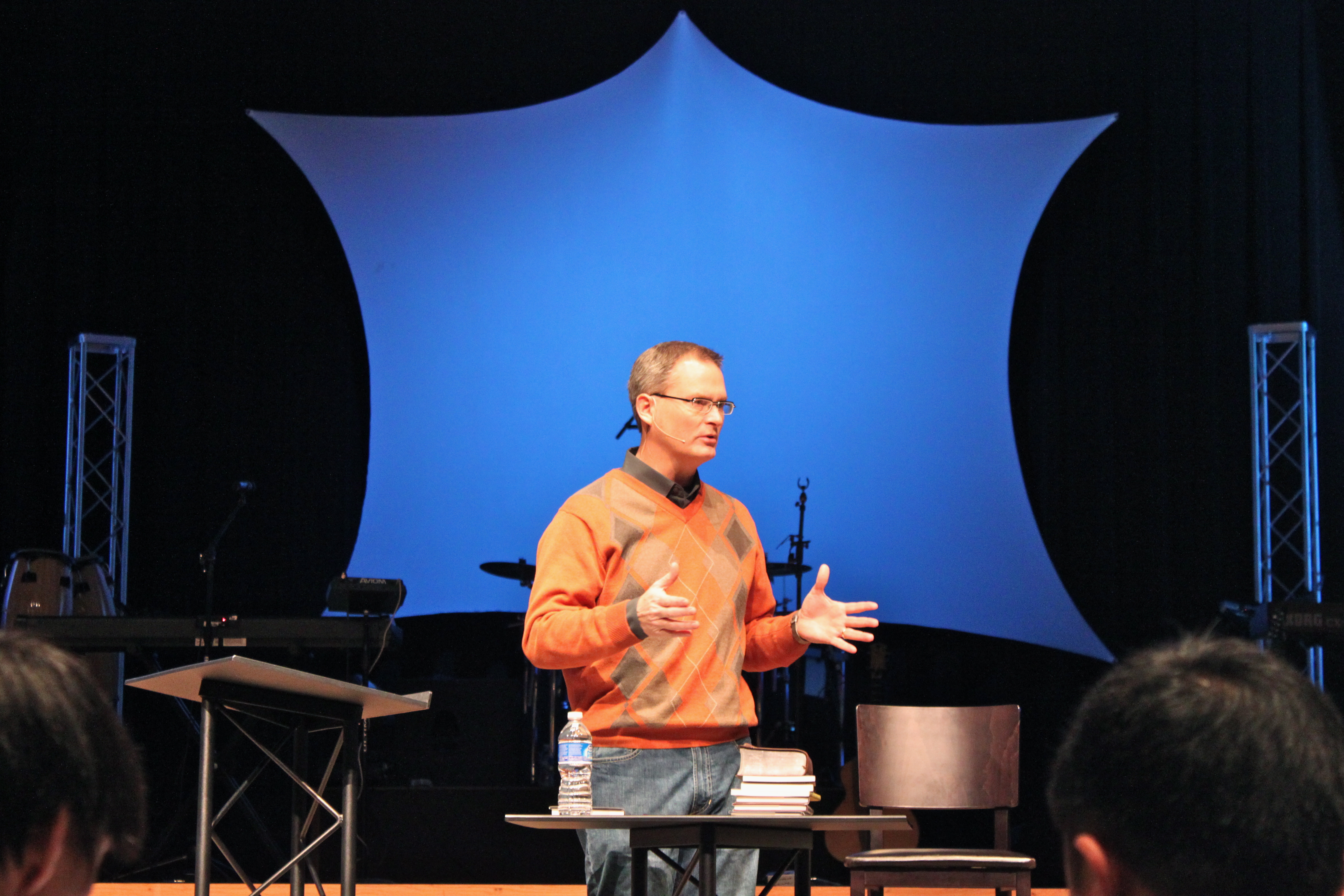
The keynote speaker for the morning was Rev. Adam Hamilton, lead pastor of Church of the Resurrection & author of numerous books including When Christians Get it Wrong, Seeing Gray, and others. Hamilton spoke from his experience with young adults & college students at Church of the Resurrection. He spoke of the increasing secularization of society and the aggressive atheism (anti-theism) present in the current American culture. He applauded campus ministers for their ministry and noted that campus ministers are on the “front lines” of understanding and working with the new generations. Hamilton remarked that Christians must “understand the questions and concerns of the people you work with and help answer some of the questions” and that we must “formulate thoughtful Christian responses” to their difficult questions.
Hamilton shared portions of his own narrative interwoven with many of the questions that young people and college students are asking–questions of Theodicy (evil in the world), questions about other world religions, and questions about sexuality. Hamilton told the tragic story of the accidental death of his two best friends while he was in college and about how that caused him to reevaluate his call to be a pastor and whether or not he could represent a loving God after their untimely deaths. Ultimately, he emerged from that 6 month time of study with the understanding that God gives humans choice and that the world has laws which are seldom suspended by God. He decided that God wrings out the good–that is forces out the good from the suffering.
In looking at other world religions Hamilton spoke of a “third way” which lies between exclusivism and universalism. This “conjunctive faith” (James Fowler’s term) is a “radical center” of inclusivism. This position articulates that Jesus is the means of salvation, but that God can give salvation to anyone God chooses. The conversation around sexuality centered specifically on homosexuality. Recognizing that this is a divisive issue in ours and other denominations, Hamilton said that 2 factors have changed his view point: 1) the complexity of the Bible (its “messiness”) and 2) spending time with the parents of gay teens or students who committed or attempted suicide. Throughout his talk, but especially in the context of this difficult issue, Rev. Hamilton modeled responsible dialogue, civil discourse (esp. in the resulting Q&A), and a vulnerable, disarming openness that helped to produce mutual understanding and a furthering of love for each other. Hamilton articulated a hopeful-critical vision for the future of the United Methodist Church that calls for young people to be “modern day reformers” helping to retool and rethink Church in ways that help the wider world to see the Christian faith as an examined, intelligible, and practical way of living.
After lunch, there were additional workshops including Fundraising w/ Creighton Alexander, Leadership with Upper Room‘s Sarah Wilke, Sabbath Keeping with GBHEM‘s Assistant General Secretary Bridgette Young, and others. For dinner, sponsored by GBHEM, we ate BBQ from Jacks Stacks (#1 or 2 BBQ place in Kansas City) and continued to share in conversation and reflection upon the workshops, the speakers, and Refresh itself.
After dinnerCreighton Alexander, Refresh organizer, led Refresh participants in recognizing and honoring the work of Jack Ewing (Exec. Dir. for Foundation for Evangelism now transitioning to Exec. Dir. of Lake Junaluska) and Royce Reynolds (longtime benefactor of United Methodism, FFE, & Refresh).
The evening’s keynote speaker wasPete Greig, UK leader of 24-7 Prayer & author of Red Moon Rising and God on Mute–two books about his experience as a church planter and prayer movement leader. Greig shared a time of teaching and practical prayer with our gathering centering around the Great Commission in Matthew 28. He focused on how “we’re all wired differently, but all are used equally in God’s purposes.” Greig shared his own personal story of prayer & his thirst for God’s presence and how that fueled the 24-7 prayer movement, which began in 1999. He shared the history of prayer movements with groups like the Moravians at Herrnhutt and John Wesley’s encounters with them–especially in the context of prayer. Pete argued that “people aren’t looking for another program or a product…they are looking for the presence of God.” And said that we as pastors must also long for that living water that God provides and that prayer is on of those primary ways by which we can experience God’s mercy and grace.
Refresh concluded, appropriately, in our saying together Wesley’s Covenant Prayer:
I am no longer my own, but thine.
Put me to what thou wilt, rank me with whom thou wilt.
Put me to doing, put me to suffering.
Let me be employed for thee or laid aside for thee, exalted for thee or brought low for thee.
Let me be full, let me be empty.
Let me have all things, let me have nothing.
I freely and heartily yield all things to thy pleasure and disposal.
And now, O glorious and blessed God, Father, Son and Holy Spirit, thou art mine, and I am thine.
So be it.
And the covenant which I have made on earth, let it be ratified in heaven.
another excellent day filled with hopeful-critical moments for engaging in prayer, conversation, worship, and reflection on how God is at work in our lives, our ministries, our campuses, our denomination, and our world.
SO, Day 2 (12.15) of Refresh has been engaging, provocative, and encouraging. During Morning Prayer this morning (in the Church of the Resurrection Covenant Chapel–the original worship space of the Church of the Resurrection) Rev. Bob Beckwith, UGA Wesley Foundation Director, led us through a reading of Psalm 23 interspersed with times of intentional prayer and music.
The morning session began around 10am with Laura Story & her band leading us in worship with the songs: Marvelous Light, Lead Me to the Cross, In Christ Alone, Mighty to Save, & I Love You Lord.
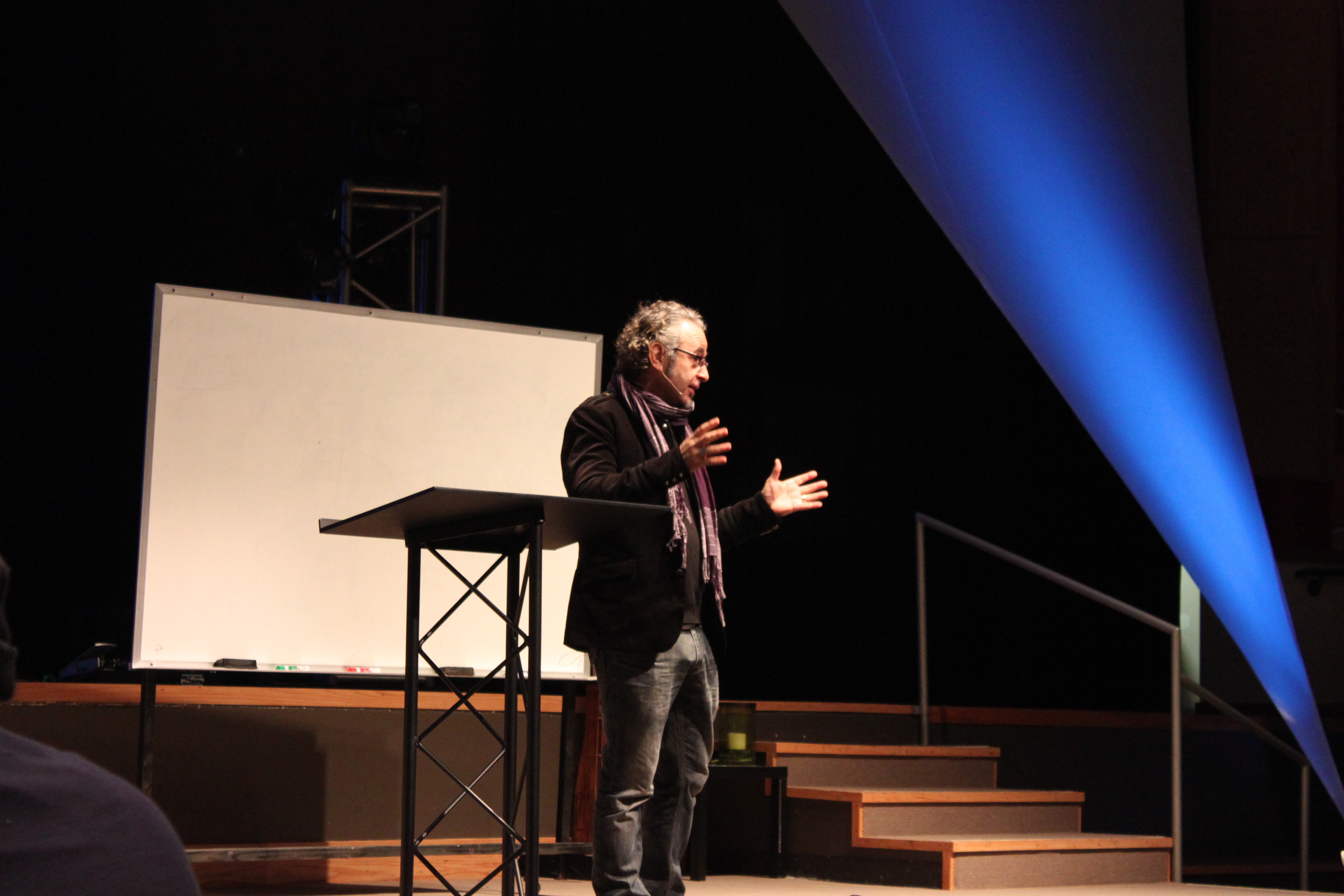
Keynote Speaker Alan Hirsch, author of Forgotten Ways & Untamed and church visionary, spoke on Ephesians 4 and the 5 different roles of leadership & ministry in verse 11: Apostle, Prophet, Evangelist, Shepherd, & Teachers. A major focus of Hirsch’s presentation, using the acronym “APEST” to denote the 5 functions, was on how the church has lost the “APE”–Apostles, Prophets, & Evangelists. Hirsch, an avid researcher of movements in global and historical Christianity, asserts that many of the large problems and the decline of mainline churches in America/the West are a result of the current ecclesial (church) structures that contribute to a loss of the emphasis & importance of the APE–especially of the focus of ordination to the role of shepherd (pastor) and the role of teacher (theologian). He posits that this lack of recognition and function in the Western church, and especially the UMC, is a direct result of this loss of the NT understanding of the nature (and mission) of the church (ecclesiology). He noted that many people who do or do not fit the accepted norms of a denomination’s expectation for ministers (especially APE’s in light of the emphasis on ST’s) have left the Mainline protestant churches resulting in either a “churchless mission” or a “missionless church.”
Hirsch further described these 5 roles and also explained their sociological dimensions/functions: Apostle–systematic designer/entrepreneurial/environment making; Prophet–ask the right questions & question the status quo; Evangelist–recruits/draws people in, likes sales/marketing/packaging; Shepherd–knits people together causing cohesion & humanizes the efforts; Teacher–helps bring about wisdom & understanding.
He explored the difficulties of the modern church and talked in some detail about the divisiveness of the laity/clergy divide–citing specifically the ills it can cause in the church. Hirsch also spoke of the need for leaders in each of these 5 areas of ministry and gave examples of how most of us would express one of the five functions as primary, secondary, etc and how knowing our own expressions of these roles might help us to be better in ministry.
After lunch (Chick-fil-a sponsored by Wesley Theological Seminary) there were two workshop sessions including further conversations with Alan Hirsch (which proved quite fruitful) and a variety of other options including “How to run a prayer room,” “Servant Evangelism,” “Sabbath Keeping,” and more.
Overall, another excellent day filled with hopeful-critical moments for engaging in prayer, conversation, worship, and reflection on how God is at work in our lives, our ministries, our campuses, our denomination, and our world.
Today was the first day of Refresh 2010: a 3 Day United Methodist Campus Ministry Conference.
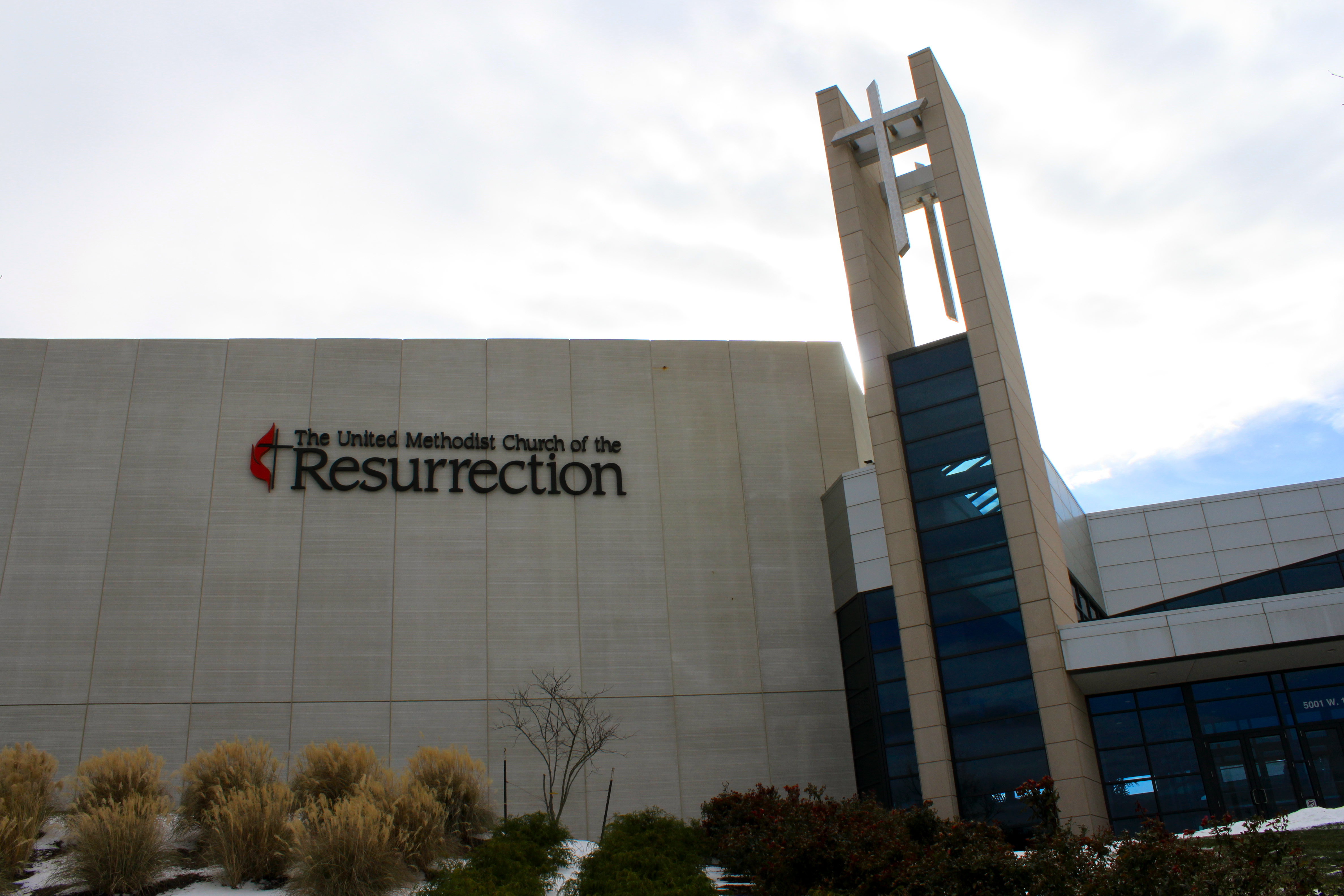
Today (12.14) was the first day of Refresh 2010: a 3 Day United Methodist Campus Ministry Conference. This is the 5th Annual gathering of Campus Ministers & those who work with college students. The purpose of Refresh is to encourage and strengthen those who work with college students through prayer, worship, dialogue, & workshops. This year’s conference is being held at Church of the Resurrection in Leawood, Kansas–home of lead pastor Adam Hamilton, who will be a keynote speaker on Day 3 of Refresh.
Things kicked off today with Rev. Olu Brown of Impact Church (Atlanta) as the keynote speaker and worship music led by Laura Story(author of “Indescribable” & other excellent worship songs). Olu brought a word entitled “Gifted” centering in on 1 Timothy 4:11-14–“These are the things you must insist on and teach. Let no one despise your youth, but set the believers an example in speech and conduct, in love, in faith, in purity. Until I arrive, give attention to the public reading of scripture, to exhorting, to teaching. Do not neglect the gift that is in you, which was given to you through prophecy with the laying on of hands by the council of elders.”
Rev. Brown admonished the some 150+ campus ministers in attendance that each is uniquely gifted and he help us to to hear what Paul was saying to Timothy in the letter:
1) Stay Connected to God (it’s easy to become disconnected–if disconnected, RE-connect)
2) Remember who you are (both your identity & that you’re a child of God)
3) use what you have (your gifts & talents–as well as your innate abilities)
4) stay in the game (don’t give up on yourself or God)
Afterward we shared in a large group skype conversation/discussion with Trent Sheppard, author of God on Campus: Sacred Causes and Global Effects. The evening continued into dinner on the town and a chance for all in attendance to connect & re-connect with friends new & old. Refresh is sponsored by the Foundation for Evangelism and has the support of a number of other UM Agencies including the General Board of Higher Education & Ministry.
an excellent hymn to play on guitar with its darker tones and easy chords.
This is my one of my favorite Advent/Christmas hymns–the words (veres 1 & 3) come from 9th Century Latin (unkown author) and the 2nd verse was composed by Rev. Henry Sloane Coffin in 1916 (president of Union Theological Seminary 1926-1945 and uncle of famous Riverside Church pastor Rev. William Sloane Coffin). The 4th verse was composed by Laurence Hull Stookey (Pastor & Liturgical guru of the 20th Century) in 1986.
The hymn was traditionally sung by monks in the 9th Century during the time of Advent (4 weeks of preparation before Christmas). It was also sung with antiphons–that is they read/sang short phrases between the verses. (Anitphons–literally “anti” in return, “phone” sound). The music comes from 15th Century France. This is an excellent hymn to play on guitar with its darker tones and easy chords.
Many people have questions about death–about what happens afterward and about what things in our lives NOW will mean LATER. In this story, a group of religious leaders are asking Jesus about what happens in “The Resurrection”–about what it means for people later in light of what is happening now.
Many people have questions about death…about what happens afterward and about what things in our lives NOW will mean LATER. In this story, a group of religious leaders are asking Jesus about what happens in “The Resurrection”–about what it means for people later in light of what is happening now. All Saints Day is a time to remember those who have gone on before us and remember how they have shaped and are shaping our lives still. The scripture will be presented three times–each time will have a set of questions and a time to think, pray, and reflect.
the Intro: The group asks Jesus what becomes of one’s marital status after death and the supposed resurrection. According to Levite laws of the time, if a man were to die leaving a widower, his brother was then to marry the widower. This was practiced not only so the family of the deceased was taken care of and all property remained within the family, but also because they believed that the spirit and memory of the dead was carried on within relatives. Jesus says, as you’ll hear, that death is not the end—that God is a God of the living.
After the video: Today we affirm that the people who have impacted our lives—that they are alive and well in Christ through the resurrection and through our memories. Today we honor their memory through the lighting of candles—praying that they continue to impact our living Christ through remembrance of the impact they have had in our lives. I invite you to pray and reflect upon the memories of those who you consider saints in your life. May we continue to live our lives being shaped by and in their memory.
This video may be used (with permission) to help augment the reading of the Gospel text for All Saints Day (often celebrated the Sunday before or after Nov. 1). It was created by the Emory Wesley Fellowship and shown at our Sunday Night Worship Service on Oct. 31, 2010.


















 Rev. Dr. Joseph McBrayer